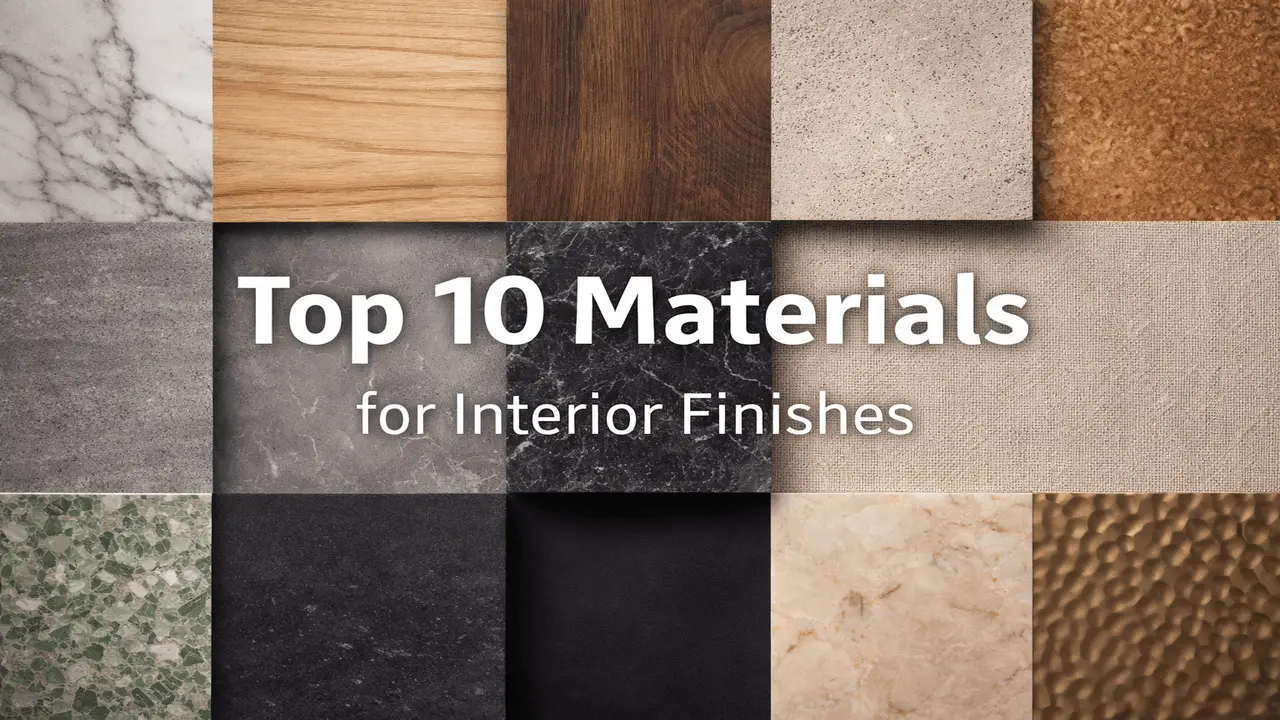
Top 10 Materials for Interior Finishes: The Ultimate Guide to Creating Beautiful Spaces
Introduction to Interior Finish Materials
Choosing the right materials for interior finishes is one of the most critical decisions in any home design or renovation project. The materials you select not only define the aesthetic appeal of your space but also determine its functionality, durability, and overall atmosphere. In today’s diverse design landscape, the most stunning interiors often result from thoughtful material combinations that balance texture, color, and purpose.
This comprehensive guide explores the top 10 material combinations for interior finishes that have proven their worth in contemporary design. Whether you’re planning a complete home makeover or simply refreshing a single room, understanding these material pairings will help you create spaces that are both beautiful and functional.
From the warm elegance of wood and marble to the industrial chic of concrete and glass, each combination offers unique benefits and distinctive character. We’ll delve deep into how these materials work together, where they’re best applied, and why they continue to dominate interior design trends worldwide.
Check: 8 Modern Luxury Bedroom Design Ideas: Stunning Color Palettes to Inspire Your Dream Space
Check: Luxury Dining Room Ideas: 8 Stunning Color Themes to Elevate Your Space
1. Wood + Metal: The Perfect Industrial-Meets-Natural Combination
Understanding the Wood and Metal Pairing
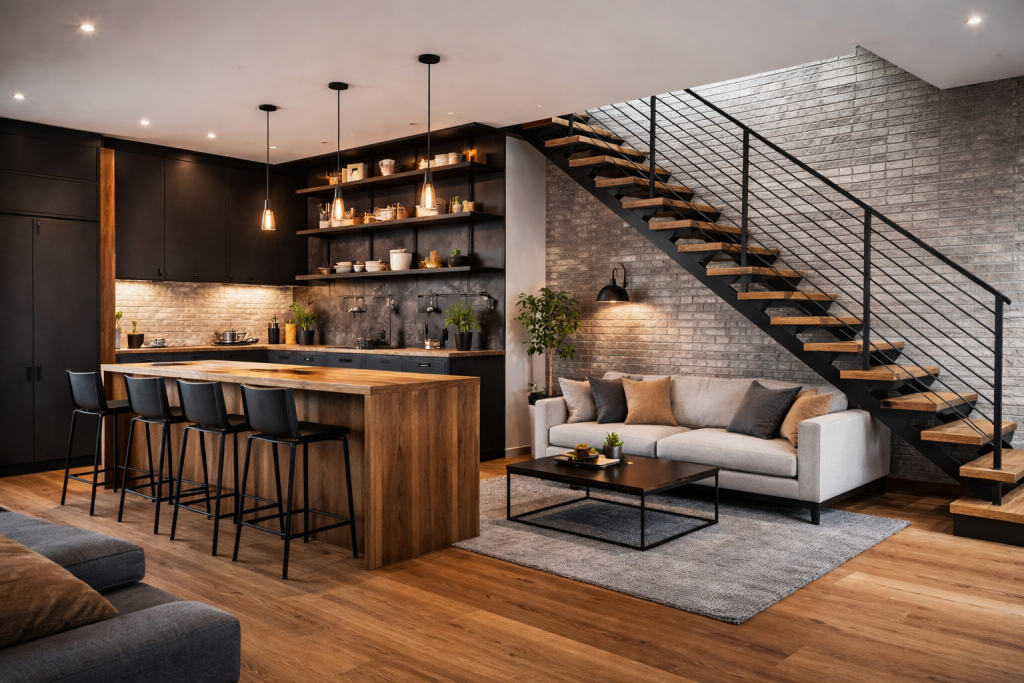
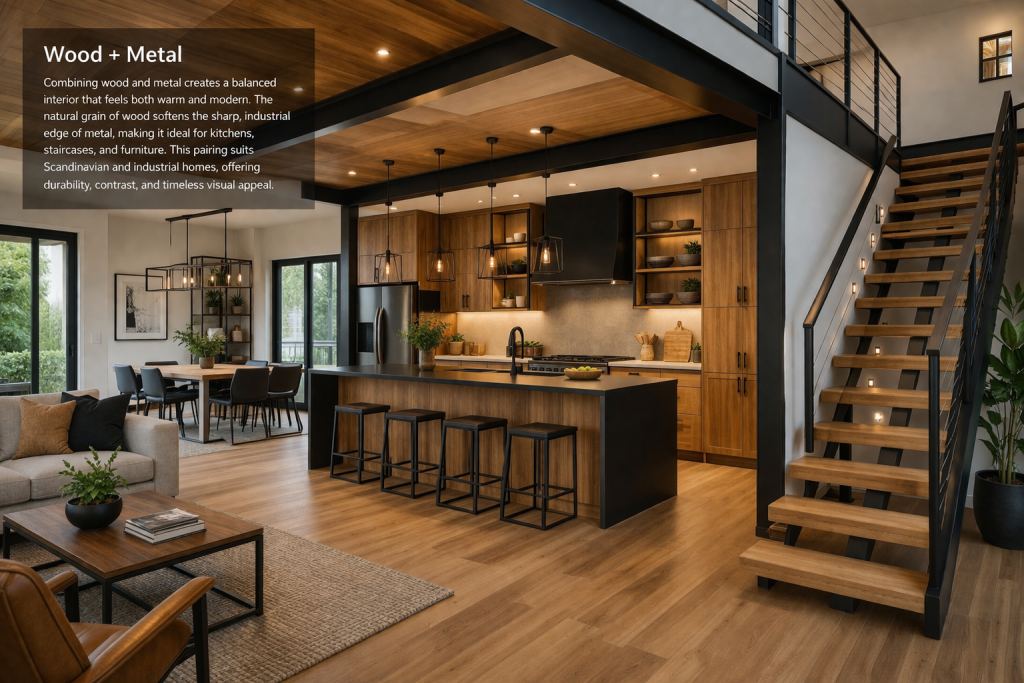
The combination of wood and metal has emerged as one of the most versatile and enduring material pairings in modern interior design. This dynamic duo creates a balanced interior that feels simultaneously warm and contemporary, bridging the gap between natural comfort and industrial sophistication.
Wood brings organic warmth, natural grain patterns, and a tactile quality that humans instinctively respond to. Metal, conversely, introduces clean lines, structural integrity, and a modern edge that prevents spaces from feeling overly rustic or traditional. Together, they create visual harmony that appeals to a broad range of design sensibilities.
Why Wood and Metal Work So Well Together
The natural grain and texture of wood effectively soften the sharp, industrial edge of metal. This contrast creates visual interest without overwhelming the senses. Wood provides warmth and approachability, while metal adds sophistication and durability. The combination feels intentional rather than accidental, creating spaces that appear thoughtfully designed.
Metal can appear in various finishes—brushed steel, matte black, polished brass, or aged copper—each bringing a different mood to the pairing. Similarly, wood species ranging from light pine to dark walnut offer diverse aesthetic possibilities. This flexibility makes the wood-metal combination adaptable to numerous design schemes.
Ideal Applications for Wood and Metal
Kitchens: Wood cabinetry paired with metal hardware, metal-framed bar stools, or stainless steel appliances creates a kitchen that’s both functional and stylish. Open metal shelving against wooden walls provides practical storage while maintaining visual appeal.
Staircases: Metal railings combined with wooden steps create striking architectural features. The structural strength of metal railings provides safety, while wooden treads offer warmth and comfort underfoot.
Furniture: Coffee tables, dining tables, and shelving units that incorporate both materials have become design staples. A wooden tabletop on a metal base, for instance, offers durability and style in equal measure.
Accent Features: Metal lighting fixtures against wooden ceilings or walls, metal-framed mirrors on wooden panels, and mixed-material room dividers all showcase this pairing’s versatility.
Design Styles That Embrace Wood and Metal
Scandinavian Design: The Scandinavian aesthetic particularly embraces this combination, favoring light woods like birch or ash paired with simple black or brushed steel metals. The result is clean, functional, and undeniably cozy.
Industrial Style: Exposed metal beams, pipes, or fixtures combined with reclaimed wood create authentic industrial spaces. The rougher the wood and more utilitarian the metal, the more authentic the industrial feel.
Modern Farmhouse: This popular style softens industrial metal elements with warmer wood tones, creating comfortable yet contemporary spaces that feel both current and timeless.
Practical Considerations
When combining wood and metal, consider the finish and maintenance requirements of both materials. Wood may require periodic sealing or oiling, while metal might need protection against moisture in certain environments. Ensure that metal components won’t cause water damage to adjacent wood elements, particularly in kitchens and bathrooms.
The weight and structural considerations also matter. Metal provides excellent structural support, making it ideal for frames and bases, while wood works beautifully for surfaces that benefit from warmth and texture.
2. Marble/Stone + Wood: Luxury Meets Warmth
The Timeless Appeal of Stone and Wood
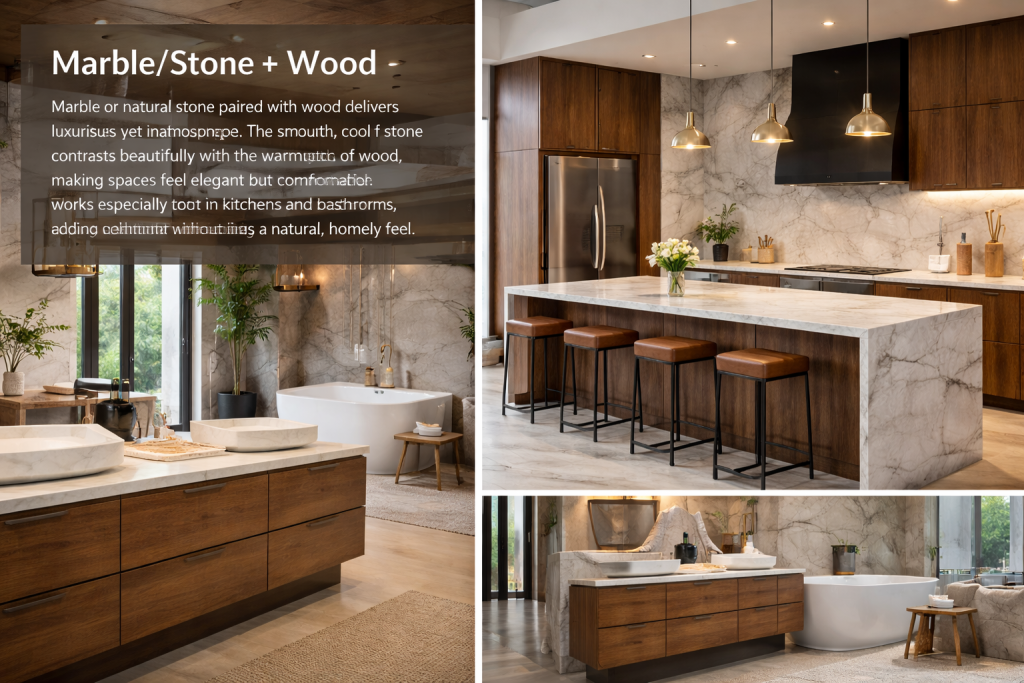
Marble and natural stone paired with wood delivers a luxurious yet inviting atmosphere that few other combinations can match. This pairing has graced high-end interiors for centuries, yet it remains remarkably current, adapting beautifully to both traditional and contemporary design schemes.
The smooth, cool surface of polished marble or natural stone creates an immediate sense of luxury and permanence. Stone’s natural veining, color variations, and substantial presence command attention. When this elegance is balanced with the organic warmth of wood, the result is spaces that feel sophisticated without being cold, elegant without being unwelcoming.
The Visual and Tactile Contrast
Stone and wood offer compelling sensory contrasts. Stone typically presents a smooth, cool-to-the-touch surface with visual depth created by natural veining and color variations. Wood provides textural warmth, visible grain patterns, and a surface that feels more immediately comfortable against skin.
This contrast creates visual interest while maintaining cohesion. The natural origins of both materials create an inherent connection—they both come from nature, just from different kingdoms. This shared naturalness helps them work harmoniously despite their different characteristics.
Perfect Applications for Marble/Stone and Wood
Kitchens: A marble or granite countertop paired with wooden cabinetry represents perhaps the most classic application of this combination. The durable, heat-resistant stone provides an ideal work surface, while wooden cabinets add warmth and hide the utilitarian aspects of kitchen storage.
Marble backsplashes against wooden cabinets create stunning focal points, especially when the stone’s veining is dramatic. Kitchen islands featuring stone countertops with wooden bases or legs ground the space while maintaining functionality.
Bathrooms: Stone flooring or wall tiles combined with wooden vanities transform bathrooms into spa-like retreats. The water-resistant properties of stone make it practical for wet areas, while wooden elements prevent the space from feeling cold or clinical.
Marble shower surrounds paired with wooden shelving or benches create luxurious yet comfortable bathing environments. The stone withstands moisture while wood (when properly sealed) adds warmth and natural beauty.
Living Spaces: Stone fireplaces flanked by wooden built-ins or mantels create dramatic focal points. Stone accent walls against wooden flooring ground contemporary living rooms with natural elegance.
Entryways: Stone flooring in entry areas provides durability and easy maintenance, while wooden console tables or benches add welcoming warmth immediately upon entering.
Stone and Wood in Different Design Styles
Modern Luxury: White Carrara or Calacatta marble paired with dark walnut or ebonized wood creates high-contrast, sophisticated spaces. Clean lines and minimal ornamentation let the materials’ natural beauty take center stage.
Rustic Elegance: Rougher stone varieties like slate or limestone combined with reclaimed or distressed wood create comfortable elegance with character and history.
Transitional Design: Honed marble or travertine with medium-toned woods like oak or cherry bridges traditional and contemporary styles, creating versatile, timeless spaces.
Choosing the Right Stone and Wood Combination
Consider the color palette carefully. Cool-toned stones like gray marble pair beautifully with light woods like ash or maple, creating serene, contemporary spaces. Warm-toned stones like travertine or beige marble complement richer woods like cherry or mahogany for traditional elegance.
The finish of the stone also matters. Polished marble creates formal elegance, while honed or matte finishes feel more relaxed and contemporary. Rough-hewn stone adds rustic character.
Maintenance and Practical Considerations
Both marble and wood require appropriate care. Marble needs sealing to prevent staining, particularly in kitchens and bathrooms. Avoid acidic cleaners that can etch the surface. Wood in moisture-prone areas needs proper sealing and periodic maintenance to prevent water damage.
Despite maintenance requirements, this combination’s durability and timeless appeal make it an excellent long-term investment. Both materials age beautifully, developing patina and character over time.
3. Concrete + Glass: Modern Minimalism at Its Finest
The Industrial Elegance of Concrete and Glass
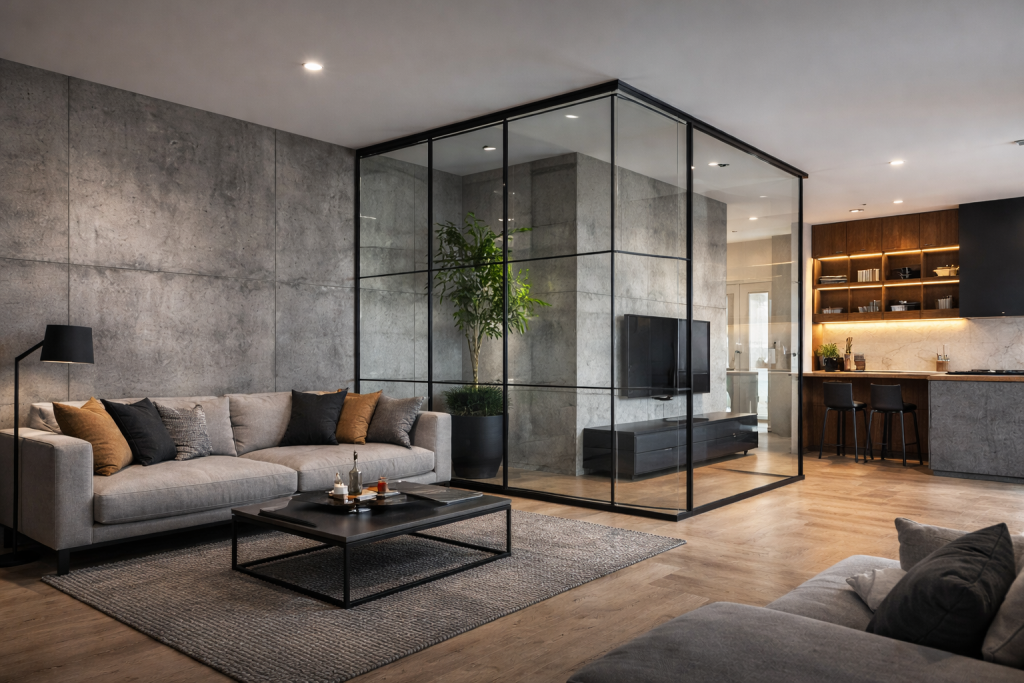
Concrete and glass together create a sleek, minimalist aesthetic that defines contemporary architecture and interior design. This pairing represents the marriage of substantial mass and ethereal transparency, creating spaces that feel both grounded and airy.
The raw, heavy appearance of concrete provides textural interest and structural honesty—it makes no attempt to be something it isn’t. Glass, in contrast, seems to dematerialize, creating openness and allowing light to flow freely throughout spaces. Together, they embody the minimalist principle of “less is more.”
Why This Combination Works
Concrete’s visual weight is brilliantly counterbalanced by glass’s transparency. Where concrete absorbs light and creates solid, defined boundaries, glass transmits light and creates visual continuity. This interplay prevents concrete-heavy spaces from feeling oppressive while giving glass-dominant areas necessary grounding.
The color palette is naturally cohesive. Concrete’s neutral gray tones complement glass’s clarity, creating a sophisticated monochromatic foundation that works beautifully with minimal accent colors or as a backdrop for bold color statements.
Ideal Applications for Concrete and Glass
Open-Plan Living Spaces: Polished concrete floors paired with floor-to-ceiling glass walls create seamless indoor-outdoor connections. The concrete provides durable flooring that withstands heavy traffic, while glass maximizes natural light and views.
Staircases: Concrete steps combined with glass railings create architectural statements. The substantial concrete treads provide safety and stability, while glass railings maintain sightlines and visual openness.
Partitions and Room Dividers: Glass partitions set in concrete frames define spaces without sacrificing light or visual flow. This application works particularly well in loft-style apartments or modern offices where maintaining openness while creating distinct zones is essential.
Bathrooms: Concrete vanities or wall panels paired with glass shower enclosures create spa-like, contemporary bathrooms. The water-resistant properties of sealed concrete make it surprisingly practical in wet environments.
Kitchens: Concrete countertops combined with glass-front cabinets or glass backsplashes create modern, functional cooking spaces. Concrete islands with glass pendant lighting above exemplify this pairing’s versatility.
Design Styles Featuring Concrete and Glass
Modern Minimalist: Clean concrete surfaces combined with frameless glass elements create the ultimate minimalist aesthetic. Restraint in decoration allows the materials’ inherent qualities to define the space.
Industrial Contemporary: Exposed concrete walls or ceilings paired with factory-style glass windows or metal-framed glass partitions create authentic industrial environments refined for comfortable living.
Brutalist: Raw concrete surfaces with minimal glass openings create bold architectural statements. This approach celebrates concrete’s monumental qualities while strategically using glass to prevent oppressiveness.
Working with Concrete and Glass
Concrete Options: Concrete appears in various forms—poured in place, precast panels, concrete blocks, or polished concrete overlays. Each offers different aesthetic possibilities and installation considerations.
Polished concrete can achieve remarkably refined finishes, revealing aggregates and creating smooth, almost stone-like surfaces. Exposed aggregate concrete offers more texture. Board-formed concrete shows the imprint of wooden forms, adding subtle pattern.
Glass Varieties: Clear glass maximizes transparency and light transmission. Frosted or textured glass provides privacy while maintaining light flow. Tinted glass adds subtle color. Low-iron glass offers maximum clarity without the greenish tint of standard glass.
Maintaining Brightness in Concrete and Glass Spaces
While concrete can feel heavy, strategic design prevents darkness. Maximize glass placement to capture natural light. Use reflective surfaces to bounce light throughout spaces. Light-colored furnishings prevent overwhelming the space with gray tones.
Artificial lighting plays a crucial role. LED strip lighting in concrete ceilings or floors creates dramatic effects. Glass allows light to penetrate deep into floor plans, reducing the need for excessive artificial lighting.
Practical Considerations
Sealed concrete is relatively low-maintenance, requiring periodic resealing and simple cleaning. Glass, while requiring regular cleaning to maintain clarity, is otherwise trouble-free.
Both materials offer excellent longevity. Properly installed and maintained, concrete and glass interiors will look contemporary for decades, making them wise investments for those seeking enduring style.
4. Tiles + Wood: Practical Warmth
The Functional Beauty of Tiles and Wood
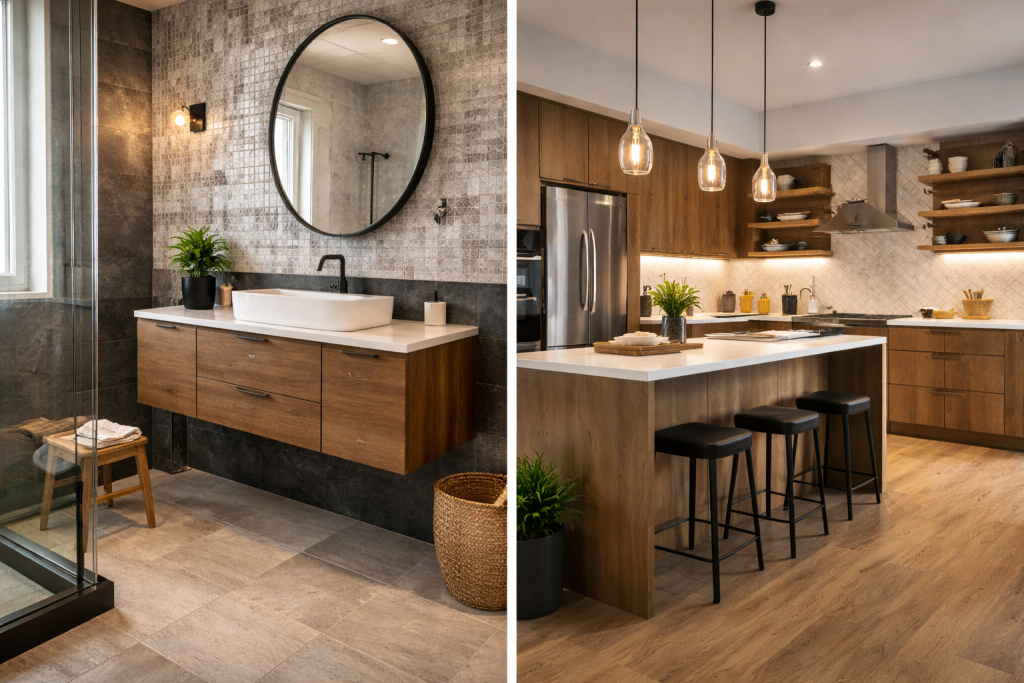
Tiles combined with wood provide both practicality and warmth, making this pairing ideal for spaces where functionality and comfort must coexist. This combination recognizes that different areas of homes have different performance requirements while maintaining aesthetic cohesion.
Tiles offer water resistance, durability, and easy maintenance—crucial qualities for bathrooms, kitchens, and high-traffic areas. Wood introduces natural warmth, visual softness, and tactile comfort. Together, they create balanced environments that work as well as they look.
Understanding the Complementary Qualities
Tiles and wood occupy different positions on the practical-aesthetic spectrum. Tiles excel at moisture resistance and durability but can feel cold and hard underfoot. Wood provides warmth and comfort but requires more care in wet environments.
By using each material where it performs best, you create spaces that don’t compromise function for beauty or vice versa. Tiles handle splashes and spills; wood provides visual and physical warmth in areas less exposed to moisture.
Strategic Applications for Tiles and Wood
Bathrooms: Perhaps nowhere does this combination shine more than in bathrooms. Tile the shower enclosure, tub surround, and floor areas prone to water exposure. Use wood for vanities, shelving, wall panels in dry areas, or even ceiling treatments.
Wood-look porcelain tiles offer an interesting hybrid approach, providing the appearance of wood with tile’s water resistance—perfect for bathroom floors where you want wood’s aesthetic without moisture concerns.
Kitchens: Tile backsplashes protect walls from cooking splashes while offering design opportunities through color, pattern, and texture. Wooden cabinets, islands, or open shelving add warmth and storage.
Tile flooring in cooking zones transitions to wooden flooring in dining areas, visually defining different functional zones within open-plan kitchens while providing appropriate materials for each area’s needs.
Entryways and Mudrooms: Durable tile flooring handles dirt, moisture, and heavy traffic in entry zones. Wooden benches, coat racks, or wall treatments add welcoming warmth.
Laundry Rooms: Practical tile flooring and backsplashes withstand water exposure, while wooden cabinets and shelving add style to these often-overlooked spaces.
Choosing Tile and Wood Combinations
Color Coordination: Select tiles and woods with complementary color palettes. Cool gray tiles pair beautifully with light woods like ash or maple. Warm terracotta or beige tiles complement richer woods like oak or cherry.
Pattern and Scale: If using patterned tiles, pair them with simpler wood elements to prevent visual chaos. Conversely, plain tiles allow more flexibility for wood with prominent grain patterns.
Texture Balance: Glossy tiles create sleek, modern looks when paired with smooth-finished woods. Matte or textured tiles feel more organic with rustic or naturally finished woods.
Tile Options That Pair Well with Wood
Ceramic and Porcelain: These versatile, affordable options come in endless colors, sizes, and finishes. Modern porcelain tiles can convincingly mimic natural stone, concrete, or even wood itself.
Natural Stone Tiles: Marble, travertine, slate, or limestone tiles add organic luxury that harmonizes beautifully with wood’s natural character.
Cement Tiles: Patterned cement tiles create focal points while maintaining earthy tones that complement wood.
Glass Tiles: Particularly in backsplashes, glass tiles add shimmer and light that plays beautifully against wood’s matte warmth.
Design Approaches for Different Styles
Modern Farmhouse: Large-format white or neutral tiles paired with rustic or reclaimed wood create the comfortable, lived-in elegance characteristic of farmhouse style.
Scandinavian: Small-scale tiles in soft grays or whites combined with light woods embody Nordic simplicity and functionality.
Mediterranean: Terracotta or patterned cement tiles paired with medium to dark woods evoke Mediterranean warmth and character.
Contemporary: Large-format tiles in neutral tones with sleek, modern wood cabinetry create clean, current spaces.
Installation Considerations
Plan transitions between tile and wood carefully. Transition strips can create clean boundaries, or you can design layouts where tiles and wood meet at doorways or natural breaks in the space.
Consider floor height. Tiles with mortar beds may create a different height than adjacent wood flooring, requiring threshold transitions or careful planning to minimize steps.
Maintenance and Longevity
Both tiles and wood are durable when properly installed and maintained. Sealed grout prevents moisture penetration and staining in tiled areas. Wood in proximity to wet tile areas should be properly sealed and selected for moisture resistance.
This combination offers excellent longevity. Quality tiles can last decades with minimal maintenance, while wood elements can be refinished if needed, allowing for cost-effective refreshing without complete replacement.
5. Paint + Wallpaper: Layered Personality
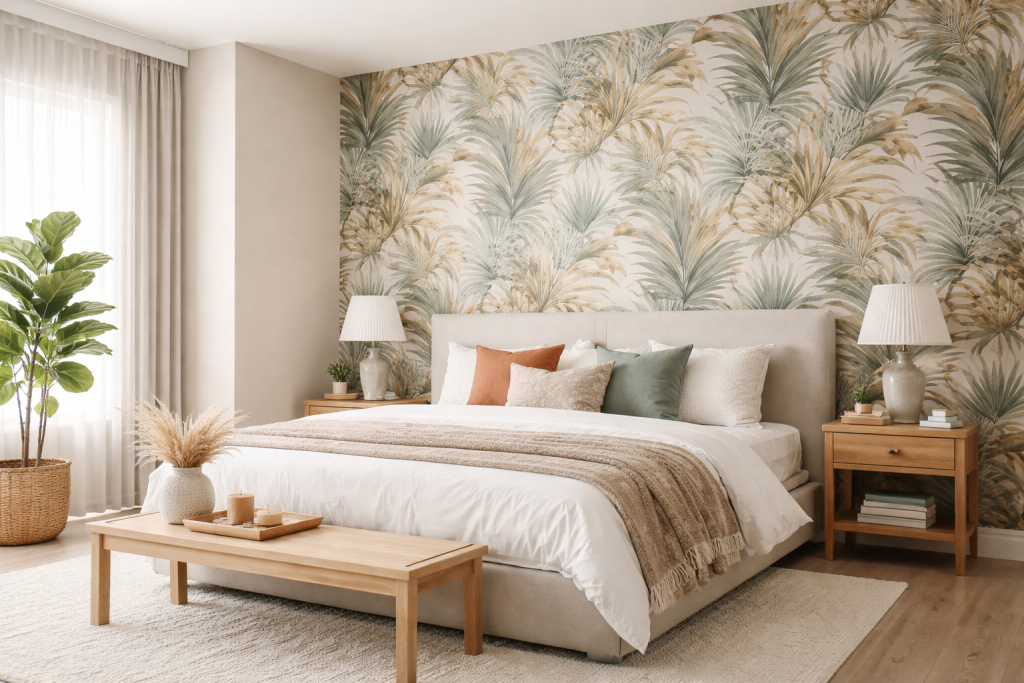
Adding Dimension Through Paint and Wallpaper
Using paint alongside wallpaper adds depth and personality to rooms in ways that either material alone cannot achieve. This combination allows you to create visual hierarchy, establish focal points, and express personal style while maintaining balance and cohesion.
Paint provides expansive, unified color that establishes a room’s overall tone. Wallpaper introduces pattern, texture, visual complexity, and bold statements. Together, they create layered interiors with dimension and interest.
The Psychology of Paint and Wallpaper Combinations
Paint keeps spaces feeling simple and cohesive, preventing visual overwhelm. It provides breathing room for the eyes and creates calm zones that balance wallpaper’s visual energy. Wallpaper, conversely, introduces personality, drama, and focal points that prevent rooms from feeling bland.
This combination recognizes that successful interiors need both moments of visual interest and periods of rest. Too much pattern overwhelms; too little creates boredom. The paint-wallpaper pairing strikes this balance perfectly.
Ideal Applications for Paint and Wallpaper
Accent Walls: The most common application involves wallpapering one wall while painting the remaining walls in a coordinating color. This creates a focal point without overwhelming the space.
In bedrooms, the wall behind the bed is a natural choice for wallpaper, drawing attention to the room’s primary furniture piece. In living rooms, the wall behind the sofa or the fireplace wall often receives wallpaper treatment.
Ceiling and Walls: Wallpapering the ceiling while painting walls creates unexpected visual interest. This works particularly well with subtle, textured wallpapers that add dimension without overwhelming.
Wainscoting and Upper Walls: Painting wainscoting or lower wall sections while wallpapering above the chair rail creates traditional elegance with personality. This approach works beautifully in dining rooms and hallways.
Powder Rooms: Small powder rooms can handle bolder wallpaper choices because their limited size prevents overwhelm. Paint the ceiling and any other surfaces in coordinating colors.
Niches and Alcoves: Wallpaper inside built-in shelving, closets with open doors, or architectural niches creates surprising moments of pattern while paint handles larger wall expanses.
Choosing Paint and Wallpaper Combinations
Color Coordination: Pull paint colors from the wallpaper pattern. If the wallpaper features blue flowers on a cream background, painting adjacent walls in one of those blues creates cohesion.
Value and Intensity: If the wallpaper is visually busy or features bright colors, choose paint in quieter, more neutral tones to provide visual rest. Conversely, subtle wallpaper textures can pair with bolder paint colors.
Pattern Scale: Large-scale patterns make bold statements in spacious rooms. Small-scale patterns work better in compact spaces or when you want subtlety.
Wallpaper Types and Their Effects
Traditional Patterns: Florals, damasks, and toiles create classic elegance. Pair with sophisticated paint colors in coordinating tones.
Geometric Patterns: Modern geometrics add contemporary energy. Pair with clean, solid paint colors that don’t compete.
Textured Wallpapers: Grasscloth, linen-textured, or embossed wallpapers add dimension without obvious pattern. These versatile options work with virtually any paint color.
Mural Wallpapers: Scenic or artistic murals create dramatic focal points. Keep surrounding painted walls neutral to let the mural shine.
Metallic Wallpapers: Gold, silver, or copper metallics add glamour. Pair with sophisticated gray, navy, or jewel-toned paints.
Design Styles Using Paint and Wallpaper
Traditional: Classic wallpaper patterns paired with historically appropriate paint colors create authentic period elegance.
Modern Eclectic: Bold, contemporary wallpaper patterns combined with unexpected paint colors create personalized, current spaces.
Transitional: Subtle wallpaper textures paired with neutral paint colors bridge traditional and contemporary styles.
Practical Application Tips
Sample First: Always sample both paint and wallpaper in your actual space before committing. Lighting dramatically affects how colors and patterns appear.
Prepare Walls Properly: Wallpaper requires smooth, properly prepared walls. Repair imperfections and apply primer designed for wallpaper to ensure proper adhesion and easier future removal.
Consider Removability: Modern peel-and-stick wallpapers offer easier installation and removal, perfect for renters or those who change styles frequently.
Professional Installation: Complex patterns requiring pattern matching may warrant professional installation to ensure clean, beautiful results.
Creating Focal Points Without Overwhelm
The key to successful paint and wallpaper combinations is restraint. Typically, wallpapering 25-30% of wall space is sufficient to create impact without overwhelm. The remaining painted surfaces provide necessary visual rest.
In open-plan spaces, use wallpaper strategically to define zones. Wallpaper the dining area accent wall while keeping living spaces painted, for instance, creating subtle separation while maintaining flow.
6. Glass + Metal: Refined Contemporary Style
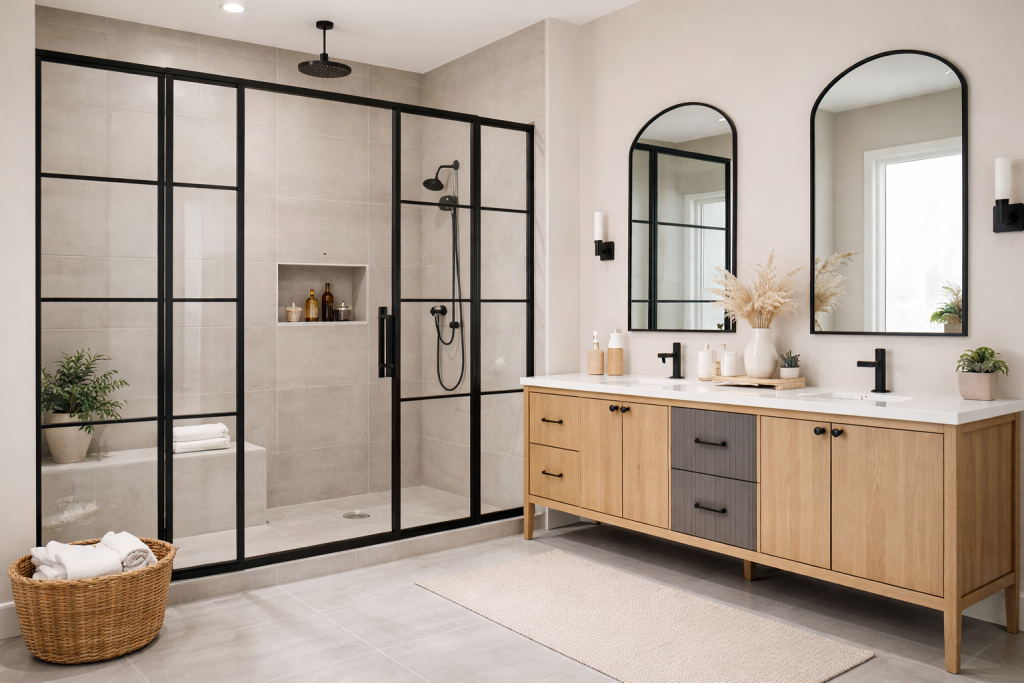
The Sleek Sophistication of Glass and Metal
Glass and metal create a refined, contemporary look frequently seen in modern and industrial interiors. This pairing exemplifies clean-lined sophistication, offering both aesthetic appeal and practical functionality.
The transparency of glass keeps spaces feeling open and airy, preventing visual clutter and maintaining sightlines. Metal frames, hardware, and accents add structure, definition, and visual interest. Together, they create environments that feel spacious, organized, and unmistakably current.
Why Glass and Metal Complement Each Other
Both materials share cool, modern characteristics. Metal’s structural strength provides the framework to support glass’s fragility. Glass’s transparency softens metal’s solidity. Each material enhances the other’s best qualities while compensating for limitations.
Metal frames define and support glass panels, creating architectural interest through the interplay of solid and void, opaque and transparent. The contrast creates visual rhythm while maintaining a cohesive modern aesthetic.
Primary Applications for Glass and Metal
Partitions and Doors: Metal-framed glass partitions divide spaces while maintaining openness and light flow. This application is popular in loft-style apartments, modern offices, and open-plan homes where creating distinct zones without sacrificing brightness or spaciousness is essential.
Glass doors with metal handles and frames provide privacy while maintaining visual connection between spaces. Frosted or textured glass offers privacy without completely blocking light.
Shower Enclosures: Perhaps nowhere is this combination more practical than in bathrooms. Metal-framed glass shower enclosures contain water while maintaining the bathroom’s visual spaciousness. Frameless glass options with minimal metal hardware create even sleeker looks.
Windows and Skylights: Modern windows featuring thin metal frames and large glass expanses maximize views and natural light while providing weather protection. Metal frames offer structural support without the visual bulk of traditional wooden window frames.
Railings and Balustrades: Glass panels set in metal frames or metal posts create safe railings for stairs, balconies, and mezzanines without obstructing views or light.
Furniture and Shelving: Glass-topped tables with metal bases, metal-framed glass shelving units, and display cabinets showcase this pairing’s versatility in furnishings.
Lighting Fixtures: Metal fixtures with glass shades or globes provide functional lighting with contemporary style.
Metal Finishes That Pair with Glass
Stainless Steel: Brushed or polished stainless steel creates clean, contemporary looks. Its neutral silver tone works in virtually any color scheme.
Black Metal: Matte or powder-coated black metal creates bold contrast and definition. This finish has become increasingly popular in modern farmhouse and industrial-contemporary styles.
Brass and Bronze: Warmer metal tones add richness and prevent glass-metal combinations from feeling too cold. These finishes work beautifully in transitional and modern-traditional spaces.
Gunmetal and Charcoal: These darker gray metals offer sophistication between bright stainless steel and solid black.
Glass Options for Different Effects
Clear Glass: Maximizes transparency and light transmission. Ideal when openness and view preservation are priorities.
Frosted or Etched Glass: Provides privacy while maintaining light flow. Perfect for bathroom partitions or office spaces requiring visual privacy.
Tinted Glass: Gray, bronze, or blue-tinted glass adds subtle color while maintaining transparency. Particularly effective in settings with intense sunlight.
Textured Glass: Fluted, ribbed, or patterned glass adds visual interest and partial privacy while allowing light transmission.
Low-Iron Glass: Offers maximum clarity without the slight green tint of standard glass. Ideal when color accuracy or invisibility is desired.
Design Styles Featuring Glass and Metal
Modern Industrial: Exposed metal frames, often in black or raw steel finishes, combined with large glass panels create authentic industrial aesthetics refined for residential comfort.
Contemporary Minimalist: Minimal metal frames—often frameless glass with minimal metal clips—create clean, uncluttered spaces where materials seem to disappear.
Art Deco Revival: Polished brass or bronze metal combined with clear or etched glass recreates 1920s glamour in contemporary contexts.
Creating Structure and Definition
Metal frames provide architectural definition that guides the eye and creates visual interest. The interplay of horizontal and vertical metal members creates geometric patterns that add rhythm to spaces.
Glass fills the spaces defined by metal frameworks, providing substance without solidity. This creates rooms that feel defined without feeling confined.
Maximizing Light with Glass and Metal
Strategic placement of glass and metal elements maximizes natural light penetration. Interior glass partitions allow light from windows to reach interior spaces. Metal frames’ thinness minimizes light blocking compared to traditional solid walls.
Consider how glass reflects and transmits light throughout the day. Positioning glass elements to catch and redirect natural light creates dynamic spaces that change with sun position.
Maintenance and Practical Considerations
Glass requires regular cleaning to maintain clarity, particularly in bathrooms and kitchens where water spots and fingerprints accumulate. However, modern glass coatings resist water and soil, making maintenance easier than ever.
Metal frames should be selected based on moisture exposure. Stainless steel and powder-coated metals resist corrosion in wet environments. Ensure proper sealing where metal meets glass to prevent water infiltration.
Safety glass—tempered or laminated—should be used in applications where breakage could cause injury, such as shower enclosures, doors, and low-level glazing.
7. Gypsum + LED Lighting: Illuminated Elegance
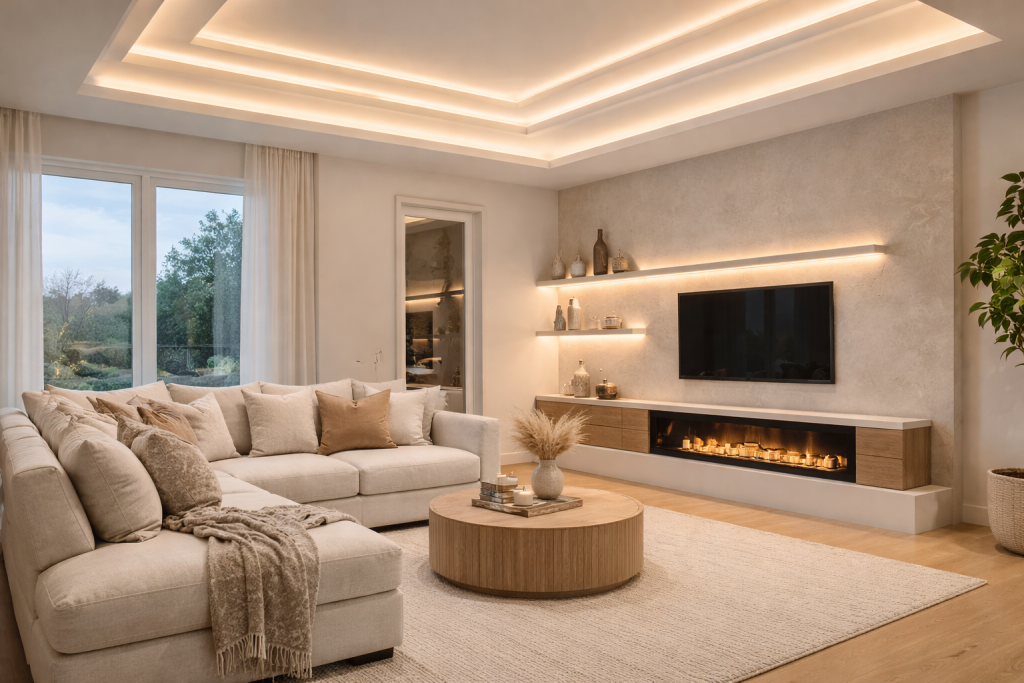
The Subtle Sophistication of Gypsum and LED Integration
Gypsum combined with LED lighting enhances interiors with subtle elegance and architectural depth. This pairing represents a thoroughly modern approach to interior finishing, where the material becomes a canvas for light itself.
Gypsum’s versatility allows for creative ceiling and wall designs—coffered ceilings, cove details, decorative moldings, and three-dimensional features. When combined with concealed LED lighting, these architectural elements come alive, creating ambiance and highlighting design features in ways that traditional lighting cannot achieve.
Understanding Gypsum’s Unique Qualities
Gypsum board, commonly known as drywall, offers remarkable versatility. It can be curved, layered, carved, and shaped to create complex architectural features. Its smooth finish accepts paint beautifully, creating seamless surfaces that serve as perfect backdrops for lighting effects.
Modern gypsum products include moisture-resistant varieties for bathrooms, fire-resistant types for enhanced safety, and lightweight options for complex ceiling installations. This variety makes gypsum suitable for virtually any interior application.
LED Lighting’s Perfect Partnership with Gypsum
LED technology has revolutionized architectural lighting. LED strips can be concealed within gypsum details, creating indirect lighting that washes walls or ceilings with gentle illumination. Unlike traditional bulbs, LEDs generate minimal heat, making them safe for close proximity to gypsum and allowing installation in tight spaces.
LEDs offer color-changing capabilities, dimming options, and exceptional energy efficiency. When integrated with gypsum architectural features, they transform static design elements into dynamic, controllable lighting systems.
Applications for Gypsum and LED Combinations
Cove Lighting: Gypsum coves around room perimeters conceal LED strips that direct light toward ceilings or walls. This creates ambient lighting that makes ceilings appear to float and rooms feel larger.
Coffered Ceilings: Recessed gypsum ceiling panels with LED lighting in the recesses add depth and luxury. LEDs can illuminate individual coffers, creating dramatic ceiling treatments.
Accent Walls: Gypsum panels with carved patterns or three-dimensional designs become focal points when backlit with LEDs. The interplay of light and shadow adds dramatic depth.
Ceiling Details: Tray ceilings, stepped ceilings, and architectural soffits all benefit from integrated LED lighting. The gypsum construction creates the framework; LEDs bring it to life.
Wall Niches and Shelving: Gypsum niches with LED lighting showcase artwork, collectibles, or books. The soft illumination draws attention without harsh spotlighting.
Headboard Walls: In bedrooms, gypsum panels behind beds with integrated LED backlighting create hotel-inspired luxury and functional reading light.
Design Effects Achieved Through Gypsum and LED Integration
Depth and Dimension: Layered gypsum elements with strategic LED placement create the illusion of depth, making rooms feel more architecturally interesting.
Ambient Lighting: Soft, indirect LED lighting provides comfortable illumination without glare, creating relaxing environments perfect for living spaces and bedrooms.
Feature Highlighting: LED lighting draws attention to architectural features, textures, or design elements that might otherwise go unnoticed.
Mood Creation: Dimmable and color-changing LEDs allow complete control over ambiance, adapting spaces from energizing brightness to relaxing dim warmth.
Perceived Height: Uplighting from gypsum coves makes ceilings seem higher than they are, particularly effective in spaces with lower ceiling heights.
Planning Gypsum and LED Installations
Early Integration: LED lighting should be planned during the construction or renovation phase, not added as an afterthought. Electrical requirements, LED placement, and gypsum construction details must be coordinated.
Professional Installation: While DIY installation is possible, professional design and installation ensure optimal results. Electricians and skilled carpenters/plasterers should collaborate for seamless integration.
Power and Control: Plan for adequate electrical power and convenient controls. Smart home integration allows LED control via apps, voice commands, or automated schedules.
Maintenance Access: Design installations allowing LED strip replacement without demolishing gypsum work. Removable panels or access points facilitate future maintenance.
Types of LED Lighting for Gypsum Integration
LED Strip Lighting: Flexible LED strips conform to curved gypsum details and provide continuous linear illumination. Available in various color temperatures, brightness levels, and colors.
LED Rope Lighting: More rigid than strips but very durable, rope lights work well in concealed locations where flexibility isn’t required.
LED Puck Lights: Small, circular LED fixtures can be recessed into gypsum for discrete accent lighting or task lighting.
LED Panels: Thin LED panel lights can be integrated into gypsum ceiling grids for even, ambient illumination.
Design Styles Incorporating Gypsum and LED Lighting
Modern Luxury: Clean gypsum lines with concealed LED lighting create sophisticated, hotel-inspired elegance in contemporary homes.
Futuristic Contemporary: Complex, curved gypsum forms with color-changing LEDs create spaces that feel cutting-edge and technologically advanced.
Transitional Elegance: Traditional gypsum moldings and coffering updated with LED lighting bridge classic and contemporary styles.
Color Temperature Considerations
LED color temperature dramatically affects mood. Warm white (2700K-3000K) creates cozy, inviting atmospheres ideal for living rooms and bedrooms. Neutral white (3500K-4000K) offers balanced illumination for kitchens and bathrooms. Cool white (5000K+) provides energizing brightness for task-oriented spaces.
Many installations use tunable white LEDs, allowing color temperature adjustment throughout the day—warmer in evenings, cooler during daytime hours.
Energy Efficiency and Sustainability
LED lighting consumes a fraction of the energy required by incandescent or even CFL bulbs. Combined with gypsum (a relatively sustainable material when sourced responsibly), this pairing creates energy-efficient interiors.
Long LED lifespans—often 50,000 hours or more—mean years of maintenance-free operation. This longevity offsets higher initial costs and reduces waste from frequent bulb replacement.
8. Stone + Metal: Bold Architectural Statements
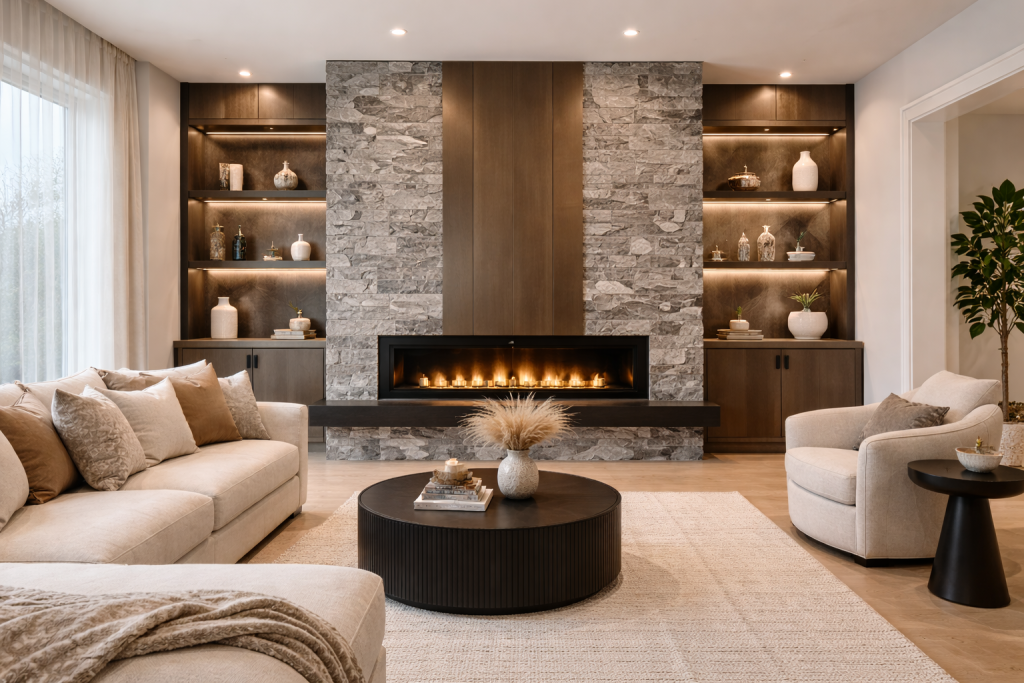
The Powerful Impact of Stone and Metal
Stone and metal together produce bold and striking design statements that command attention. This pairing combines two of humanity’s oldest building materials, each bringing timeless strength and distinctive character to contemporary interiors.
The rough, natural texture of stone contrasts beautifully with the smooth, polished finish of metal. Stone provides organic, earthy permanence while metal introduces refined, manufactured precision. Together, they create visual interest through textural contrast while sharing a sense of substantiality and strength.
Understanding the Stone and Metal Synergy
Both stone and metal convey durability and luxury. Stone connects interiors to nature and geological time scales, creating grounding presence. Metal represents human craftsmanship and technological advancement. The combination bridges natural and manufactured worlds, creating spaces that feel both timeless and contemporary.
The color palette works harmoniously. Stone’s earthy tones—grays, browns, beiges, blacks—complement metal’s finishes. Cool-toned stones pair beautifully with stainless steel or brushed nickel. Warm-toned stones coordinate with brass, bronze, or copper.
Ideal Applications for Stone and Metal
Feature Walls: Stone cladding with metal accents creates dramatic focal points in living rooms or bedrooms. Metal shelving integrated into stone walls adds functional beauty. Metal-framed panels of stone create contemporary wall treatments that feel substantial yet refined.
Fireplaces: Stone fireplace surrounds with metal mantels, screens, or integrated shelving create commanding architectural features. The fire-resistant properties of both materials make this pairing practical as well as beautiful.
Kitchen Elements: Stone countertops combined with metal backsplashes create high-end kitchens. Metal shelving against stone accent walls adds industrial edge to cooking spaces.
Bathroom Vanities: Stone countertops on metal-based vanities create spa-like luxury. Stone wall cladding with metal fixtures and accessories adds texture and sophistication.
Architectural Details: Stone columns or pillars with metal capitals or bases create classical-meets-contemporary architectural statements. Stone steps with metal railings combine safety with style.
Exterior-Interior Transitions: Stone flooring flowing from outdoor to indoor spaces with metal-framed doors or windows creates seamless connections to nature.
Stone Varieties That Pair with Metal
Granite: Dense, durable granite in gray, black, or earth tones pairs exceptionally well with stainless steel or black metal for contemporary looks.
Slate: The layered texture and matte finish of slate creates striking contrast with polished metals. Works beautifully in both rustic and contemporary settings.
Limestone and Travertine: These softer, warmer stones complement brass, bronze, or copper metals for traditional or transitional spaces.
Marble: Polished marble creates luxury that metal accents enhance. White marble with gold or brass metals creates classic elegance; dark marble with chrome or steel feels modern.
Basalt and Lava Stone: Dark, dense volcanic stones create dramatic impact with any metal finish, particularly effective in feature walls or fireplace surrounds.
Quartzite: This durable stone offers marble-like beauty with superior durability, pairing beautifully with contemporary metal finishes.
Metal Finishes for Stone Pairings
Blackened or Oxidized Steel: Creates bold contrast, particularly effective with lighter stones. The industrial aesthetic pairs well with rough-hewn or natural-edge stone.
Brushed Stainless Steel: Offers contemporary sophistication that complements any stone variety. The neutral finish prevents competing with stone’s natural patterns.
Brass and Bronze: Warmer metal tones create richness and pair particularly well with beige, cream, or warm gray stones.
Copper: The warm, living finish of copper—which develops patina over time—creates organic harmony with natural stone.
Corten Steel: This weathering steel develops a rust-like patina that creates stunning contrast with stone while maintaining structural integrity.
Design Styles Featuring Stone and Metal
Modern Industrial: Raw concrete or stone combined with exposed metal beams, pipes, or panels creates authentic industrial spaces refined for residential comfort.
Contemporary Luxury: Polished marble or granite with sleek metal accents creates high-end elegance in modern homes.
Rustic Modern: Rough stone combined with clean-lined metal elements bridges rustic warmth and contemporary sophistication.
Minimalist: Simple stone surfaces with minimal metal accents embody the “less is more” philosophy while maintaining visual interest through textural contrast.
Creating Visual Interest Through Contrast
The textural contrast between stone and metal creates automatic visual interest. Stone’s irregular, organic surface contrasts with metal’s uniform, manufactured finish. Rough stone against smooth metal creates compelling tactile as well as visual experiences.
Play with scale as well. Large stone expanses balanced by delicate metal details create sophisticated hierarchy. Conversely, substantial metal elements anchoring smaller stone features can create equally effective compositions.
Practical Considerations
Both stone and metal are exceptionally durable, making this combination an excellent long-term investment. However, each requires appropriate care.
Stone needs sealing to prevent staining, particularly porous varieties like marble, limestone, or travertine. Regular cleaning with pH-neutral products preserves finish and appearance.
Metal finishes vary in maintenance requirements. Stainless steel resists corrosion but shows fingerprints. Brass and copper develop patina over time—beautiful to some, requiring polishing to others. Powder-coated metals resist wear and need minimal maintenance.
Installation Complexity
Installing stone and metal combinations often requires professional expertise. Stone is heavy and requires appropriate structural support. Metal fabrication for custom pieces demands specialized skills and equipment.
However, the investment in professional installation ensures safety, proper function, and beautiful results that will last for decades.
9. Laminate/Veneer + Glass: Affordable Modern Style
The Practical Elegance of Laminate, Veneer, and Glass
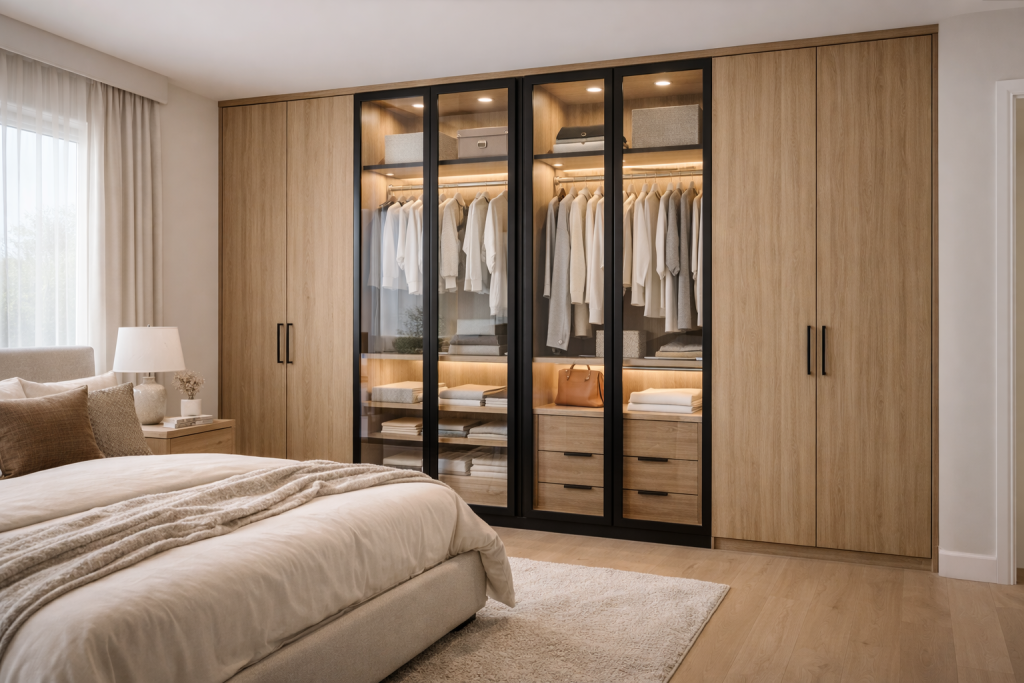
Laminate or veneer paired with glass offers a modern and cost-effective design solution that doesn’t sacrifice style for budget. This combination recognizes that beautiful interiors needn’t require premium-priced materials—thoughtful material selection and application can create high-end looks at moderate costs.
While laminate and veneer mimic the appearance of natural wood, glass adds brightness, openness, and a sleek finish. Together, they create clean, contemporary spaces that feel light-filled and stylish while remaining affordable and low-maintenance.
Understanding Laminate and Veneer
Laminate: Made from synthetic materials bonded together under heat and pressure, laminate offers durability, water resistance, and countless design options. Modern laminates can convincingly replicate wood, stone, concrete, or solid colors.
High-pressure laminate (HPL) provides exceptional durability for countertops and high-use surfaces. Thermally fused laminate (TFL) offers good performance at lower cost, perfect for cabinetry and furniture.
Veneer: Real wood veneer consists of thin slices of genuine wood adhered to stable substrate materials like plywood or MDF. Veneer provides authentic wood appearance and grain patterns at lower cost than solid wood while offering better stability and dimensional consistency.
Why This Combination Works
Laminate and veneer provide the warmth and visual interest of wood-like surfaces. Glass adds transparency, light reflection, and contemporary sleekness. The materials share modern, manufactured characteristics—neither pretends to be something it isn’t, creating honest, contemporary aesthetics.
Glass doors or panels lighten what might otherwise feel heavy if constructed entirely from wood-look materials. The transparency creates visual breathing room, preventing spaces from feeling closed or dark.
Primary Applications for Laminate/Veneer and Glass
Wardrobes and Closets: Laminate or veneer wardrobe exteriors with glass-front sections create modern storage solutions. Frosted glass provides privacy for clothing storage while clear glass showcases shoes, accessories, or organized spaces.
Glass shelving inside laminate or veneer cabinets adds elegance and allows light to penetrate deep into storage spaces. LED lighting behind glass shelves creates boutique-like display opportunities.
Kitchen Cabinets: Laminate or veneer base cabinets paired with glass-front upper cabinets create kitchens that feel open and light. Glass displays attractive dishware while laminate provides affordable, durable storage for everyday items.
Entertainment Centers: TV units and media storage combining laminate or veneer with glass shelving create functional, attractive focal points. Glass shelves accommodate electronics while allowing remote signals and heat dissipation.
Office Furniture: Desks, bookcases, and storage units combining these materials create professional, modern home offices. Glass-front cabinets display books while laminate provides practical work surfaces and concealed storage.
Bathroom Vanities: Laminate vanities resist moisture and offer easy cleaning. Glass countertops or glass-front medicine cabinets add elegance while maintaining practicality.
Design Strategies for Maximum Impact
Color Coordination: Match laminate colors to overall color schemes. Light wood-look laminates create Scandinavian-inspired spaces; dark veneers feel more traditional or sophisticated. Glass in clear, frosted, or tinted varieties can complement any color choice.
Mixing Finishes: Combining matte laminate with glossy glass creates textural interest. High-gloss laminates with frosted glass maintains sleek continuity while adding depth.
Minimizing Visible Edges: Quality edge banding on laminate creates cleaner, more refined appearances. Frameless glass panels appear more expensive than framed alternatives.
Strategic Glass Placement: Use glass where it provides functional benefits—allowing light into closed storage, creating display opportunities, or making spaces feel larger—rather than simply as decoration.
Laminate and Veneer Options
Wood-Look Laminates: Oak, walnut, maple, and exotic wood patterns provide natural warmth without solid wood costs. Modern printing technology creates remarkably realistic wood grain patterns.
Solid Colors: Matte or glossy solid-color laminates create contemporary, minimalist aesthetics. White, gray, black, and bold accent colors offer design flexibility.
Textured Laminates: Three-dimensional textures mimicking wood grain, stone, or fabric add tactile realism and visual authenticity.
Metallic Laminates: Brushed metal-look laminates paired with glass create ultra-modern, industrial-inspired pieces.
Glass Types for This Combination
Clear Glass: Creates maximum transparency and light transmission. Ideal for display and maintaining openness.
Frosted Glass: Provides privacy while maintaining light flow. Perfect for concealing less-organized storage while maintaining contemporary style.
Back-Painted Glass: Glass painted on the reverse side creates solid color panels with glass’s smooth, easy-to-clean surface. Available in any color to coordinate with laminate selections.
Mirror: Mirrored glass panels make spaces feel larger and brighter. Particularly effective in wardrobe doors.
Design Styles Using Laminate/Veneer and Glass
Scandinavian Modern: Light wood-look veneers or laminates with clear glass create the bright, airy aesthetic characteristic of Nordic design.
Contemporary Minimalist: Solid-color laminates in white or gray with clear or frosted glass embody clean-lined minimalism.
Industrial Chic: Dark wood-look laminates or concrete-look laminates with clear glass and metal accents create affordable industrial style.
Modern Traditional: Medium wood-tone veneers with divided-light glass doors bridge traditional and contemporary aesthetics.
Maximizing Light and Space
Glass elements in laminate or veneer furniture help small spaces feel larger. Glass shelving appears to float, taking up less visual space than solid shelves. Glass-front cabinets reflect light deeper into rooms.
In small apartments or condos, this material combination creates sophisticated storage without overwhelming limited square footage.
Maintenance and Durability
Modern laminates offer excellent durability, resisting scratches, stains, and moisture better than many natural materials. They require only simple cleaning with mild soap and water.
Quality veneers, properly finished, also provide good durability and easy maintenance. They’re less susceptible to moisture damage than solid wood while offering authentic wood beauty.
Glass requires regular cleaning to maintain clarity but is otherwise remarkably durable and low-maintenance.
Cost-Effectiveness
This combination offers exceptional value. Laminate and veneer cost significantly less than solid wood while providing comparable aesthetics. Glass, particularly in standard clear or frosted varieties, remains affordable.
The combination allows budget-conscious homeowners to achieve high-end looks without premium price tags. Money saved on materials can be invested in quality hardware, professional installation, or other design elements.
10. Concrete + Wood: Industrial Warmth
The Perfect Balance of Raw and Refined
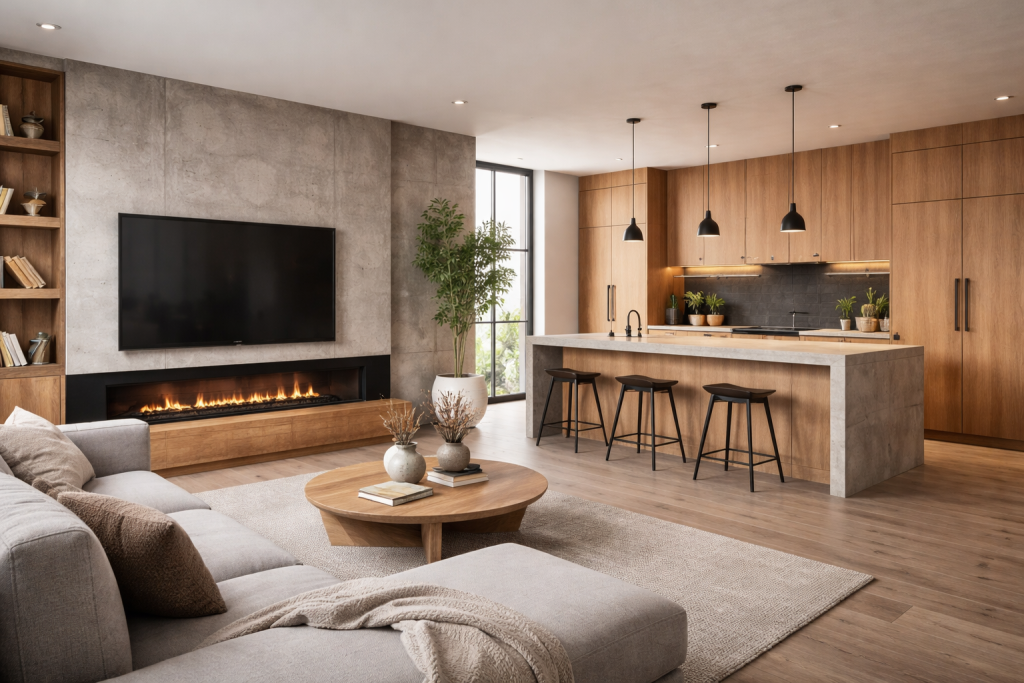
Concrete and wood create a perfect balance between raw industrial elements and warm, natural materials. This pairing has become one of the most popular combinations in contemporary interior design, appearing in everything from urban lofts to modern suburban homes.
The industrial feel of concrete is beautifully softened by the natural texture and warmth of wood. Concrete provides grounding, permanence, and contemporary edge; wood adds comfort, approachability, and organic beauty. Together, they create environments that feel both modern and welcoming, sophisticated yet livable.
Understanding the Concrete-Wood Dynamic
Concrete and wood occupy opposite ends of the material spectrum in some ways—one is manufactured and processed, the other is organic and natural. Yet they share certain characteristics: both are substantial, both age beautifully, and both are honest materials that don’t pretend to be something they’re not.
The textural contrast creates immediate visual interest. Concrete’s smooth or rough surface—depending on finish—contrasts with wood’s grain patterns and natural variations. The color palette also works harmoniously, with concrete’s grays complementing wood tones from light blonde to deep walnut.
Ideal Applications for Concrete and Wood
Living Rooms: Concrete accent walls or concrete fireplaces paired with wooden flooring, furniture, or ceiling treatments create modern living spaces with warmth. Concrete TV walls with wooden built-in shelving combine function and style.
Kitchens: Polished concrete countertops paired with wooden cabinetry create durable, contemporary cooking spaces. Concrete islands with wooden tops or seating areas add functional variety. Concrete floors with wooden ceiling beams bridge industrial and rustic aesthetics.
Dining Areas: Concrete-topped dining tables with wooden bases or chairs create statement pieces. Concrete floors anchor dining rooms while wooden furniture adds comfort and warmth.
Bedrooms: Concrete accent walls behind beds create modern focal points, softened by wooden bed frames, flooring, or furniture. Concrete platform beds with wooden headboards showcase this pairing in furniture form.
Bathrooms: Concrete vanity tops paired with wooden cabinetry create spa-like bathrooms. Concrete floors with wooden accents (properly sealed) add contemporary character.
Staircases: Concrete steps with wooden treads or wooden stairs with concrete walls exemplify this combination’s architectural potential.
Concrete Options for Interior Use
Polished Concrete Floors: Ground and polished to varying sheens, these floors reveal aggregates and create smooth, durable surfaces. They pair beautifully with wood flooring in adjacent spaces or wooden furniture and accents.
Concrete Countertops: Custom-poured or precast concrete countertops offer unique, durable surfaces. They can be tinted, textured, or finished in numerous ways to complement wooden cabinetry.
Concrete Wall Panels: Precast panels or poured-in-place concrete walls create dramatic architectural features. Board-formed concrete shows wooden form imprints, creating subtle texture and connecting to wooden elements.
Concrete Tiles: Cement tiles offer concrete’s aesthetic in more manageable formats. They work beautifully for floors or feature walls alongside wooden elements.
Concrete Overlay: Thin concrete overlays can be applied to existing floors, creating concrete appearance without the weight and expense of full concrete installation.
Wood Choices for Concrete Pairings
Light Woods: Ash, maple, or light oak prevent spaces from feeling too heavy when paired with gray concrete. These create Scandinavian-modern aesthetics with concrete’s edge.
Medium Tones: Oak, walnut, or teak in medium browns create balanced warmth against concrete’s coolness.
Dark Woods: Ebonized or naturally dark woods like walnut create high-contrast, dramatic pairings with lighter concrete.
Reclaimed Wood: Weathered, reclaimed wood adds history and character that softens concrete’s newness and manufactured appearance.
Design Styles Featuring Concrete and Wood
Industrial Modern: Exposed concrete walls or ceilings paired with reclaimed wood beams, flooring, or furniture create authentic industrial spaces refined for comfortable living.
Scandinavian Contemporary: Polished concrete floors with light wood furniture and accents create Nordic-inspired minimalism with warmth.
Modern Rustic: Rough concrete elements paired with natural-edge wood or barn wood creates contemporary takes on rustic design.
Minimalist: Simple concrete surfaces with carefully selected wooden furniture pieces embody “less is more” while maintaining human warmth.
Creating Balance Between Materials
The key to successful concrete-wood pairings is achieving balance. Too much concrete feels cold and unwelcoming; too much wood can seem overly traditional or rustic. The magic happens in the middle.
Generally, use concrete for larger architectural elements—floors, walls, countertops—and wood for furniture, accents, and warmth-adding details. Alternatively, concrete accent features (fireplace, single wall) can anchor spaces with predominantly wooden elements.
Adding Warmth to Concrete Spaces
Wood is the primary warmth-adding material, but supporting strategies help:
Textiles: Rugs, throws, and cushions in natural fibers add softness and comfort to concrete-heavy spaces.
Lighting: Warm-toned lighting prevents concrete from appearing cold. Wooden light fixtures reinforce the material palette.
Plants: Greenery adds life and softness, creating natural contrast to concrete’s manufactured solidity.
Art and Accessories: Warm-toned artwork and decorative objects prevent sterility in concrete-dominated spaces.
Practical Considerations
Concrete Maintenance: Sealed concrete is relatively low-maintenance but requires periodic resealing. Spills should be cleaned promptly to prevent staining, particularly with acidic liquids.
Wood Maintenance: Wood in proximity to concrete may require additional sealing for moisture protection, particularly in kitchens and bathrooms. Regular cleaning and occasional re-oiling or refinishing maintain appearance.
Thermal Comfort: Concrete floors can feel cold underfoot. Radiant floor heating systems provide comfort while maintaining the material’s visual appeal. Area rugs offer another solution.
Acoustic Considerations: Both concrete and wood can be acoustically hard surfaces. Incorporate soft furnishings, rugs, or acoustic panels if sound reflection becomes problematic.
Sustainability Aspects
Both materials can be sustainable choices:
Concrete: Modern concrete mixes can incorporate recycled content. Its thermal mass provides passive heating and cooling benefits. Durability ensures long lifespan without replacement.
Wood: Responsibly sourced or reclaimed wood is renewable and carbon-sequestering. Its natural insulation properties complement concrete’s thermal mass.
Cost Considerations
Concrete costs vary widely based on application. Polished concrete floors can be cost-effective, especially in new construction. Custom concrete countertops and features represent higher investments.
Wood costs also vary based on species, source, and quality. Reclaimed wood may cost more but offers unique character. The combination allows flexibility—invest in statement concrete elements with affordable wood accents, or vice versa.
Conclusion: Choosing the Right Materials for Your Space
Synthesizing Material Knowledge into Design Decisions
Creating beautiful, functional interiors requires more than simply selecting attractive materials—it demands understanding how materials interact, where they perform best, and how they align with your lifestyle, aesthetic preferences, and budget.
The ten material combinations explored in this guide represent proven partnerships that balance beauty and practicality. Each pairing offers distinct advantages:
- Wood + Metal delivers industrial warmth perfect for Scandinavian and contemporary industrial styles
- Marble/Stone + Wood creates accessible luxury ideal for kitchens and bathrooms
- Concrete + Glass embodies minimalist modernity for open, light-filled spaces
- Tiles + Wood provides practical warmth where function meets comfort
- Paint + Wallpaper adds personality and depth through layered design
- Glass + Metal offers refined sophistication in contemporary settings
- Gypsum + LED Lighting creates illuminated architectural elegance
- Stone + Metal makes bold statements through textural contrast
- Laminate/Veneer + Glass delivers affordable modern style without compromising aesthetics
- Concrete + Wood balances raw industrial elements with natural warmth
Practical Decision-Making Framework
When selecting materials for your interior finishes, consider these key factors:
1. Functional Requirements: Different spaces have different performance needs. Moisture resistance matters in bathrooms; durability is crucial in high-traffic areas; heat resistance is essential near cooking surfaces. Choose materials that meet your space’s specific functional demands.
2. Aesthetic Goals: Define your desired atmosphere. Do you want modern minimalism, warm traditional comfort, industrial edge, or luxurious elegance? Select material combinations that naturally support your aesthetic vision.
3. Budget Reality: Beautiful interiors exist at every price point. Prioritize spending on high-visibility, high-use areas. Consider cost-effective alternatives like laminate or veneer where appropriate. Invest in quality installation regardless of material costs.
4. Maintenance Willingness: Honestly assess your willingness to maintain different materials. High-maintenance materials like marble require regular care; low-maintenance options like laminate offer ease. Choose materials whose maintenance requirements match your lifestyle.
5. Longevity Expectations: Some materials age beautifully, developing patina and character. Others may date or wear poorly over time. Consider whether you want timeless materials that will remain current for decades or more trendy options you’re willing to update periodically.
Creating Cohesive Material Palettes
Successful interiors typically limit material variety to maintain cohesion. Select 2-3 primary material combinations for your home, using them consistently across spaces with variations in application or proportion.
For example, you might feature wood and metal throughout your home—wood flooring and metal fixtures in living areas, wood cabinetry with metal hardware in kitchens, wood vanities with metal-framed mirrors in bathrooms. This creates a cohesive thread while allowing each space its own character.
The Importance of Quality Installation
Even the finest materials fail to impress when poorly installed. Budget for professional installation, particularly for complex applications like concrete countertops, intricate tile work, or integrated LED lighting systems. Quality installation ensures safety, proper function, and beautiful results that justify your material investment.
Sampling and Testing
Never commit to materials without sampling them in your actual space. Lighting dramatically affects how materials appear. What looks perfect in a showroom may read completely differently in your home’s specific lighting conditions.
Order samples, live with them for several days, observe them in morning and evening light, and ensure they coordinate with existing elements before making final selections.
Sustainability Considerations
Increasingly, material selection includes environmental impact considerations. Look for:
- Sustainably sourced wood with FSC certification
- Concrete with recycled content
- Low-VOC paints and adhesives
- Locally sourced stone to reduce transportation impacts
- Durable materials that won’t require frequent replacement
- Materials that can be recycled at end of life
Future-Proofing Your Selections
While trends come and go, certain material qualities remain timelessly appealing: natural authenticity, quality craftsmanship, appropriate material use, and thoughtful design. Focus on these fundamental qualities rather than chasing fleeting trends.
Classic material combinations—wood with stone, metal with glass—have remained popular for decades because they’re based on enduring design principles rather than temporary fashion.
Personal Expression Within Proven Frameworks
While this guide presents proven material combinations, your home should reflect your personality. Use these pairings as starting points, then personalize through color choices, finish selections, proportions, and applications that resonate with your individual taste.
The same concrete and wood combination appears completely different when executed with light woods and smooth concrete versus dark woods and rough concrete. These nuances allow personal expression within successful frameworks.
Final Thoughts
Interior finish materials profoundly impact how spaces look, feel, and function. The combinations explored in this guide offer reliable starting points for creating beautiful, practical interiors across diverse styles and budgets.
By understanding how materials complement each other—how metal’s coolness balances wood’s warmth, how glass’s transparency lightens concrete’s weight, how stone’s luxury becomes approachable through wood—you can make confident decisions that result in cohesive, attractive, functional spaces you’ll love for years to come.
Great interior design isn’t about following rigid rules or using the most expensive materials. It’s about thoughtful material selection that serves your space’s specific needs while expressing your personal aesthetic. The material combinations presented here provide frameworks for success, but the true magic happens when you adapt them to create spaces uniquely your own.
Whether you’re building new, renovating completely, or simply refreshing a single room, these time-tested material pairings offer reliable foundations for design decisions. Choose materials that resonate with your lifestyle, commit to quality installation, and trust that thoughtful material selection creates interiors that look beautiful and function flawlessly day after day, year after year.