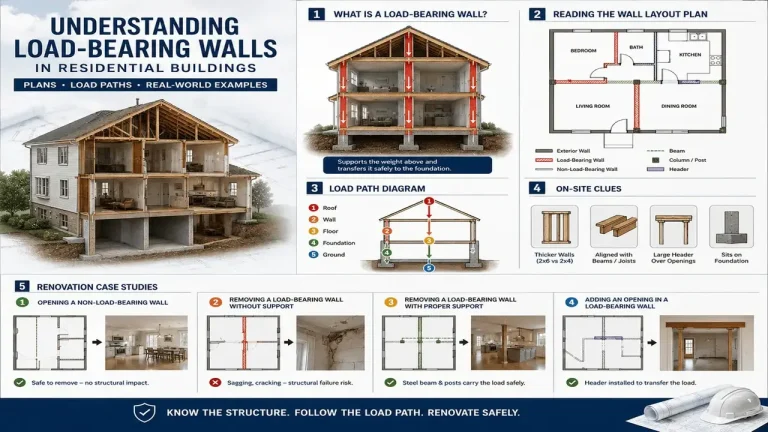

Flat Slab vs Beam Slab – Detailed Comparison

When planning a building, one of the most important structural decisions is the selection of the slab system. Among the most commonly used options in reinforced concrete construction are the flat slab and the beam slab. Both systems are widely used in residential, commercial, institutional, and industrial buildings, but they differ significantly in terms of structural behavior, construction process, cost, span capability, aesthetics, and practical suitability.
For architects, structural engineers, builders, contractors, and even property owners, understanding the difference between these two systems is essential. Choosing the wrong slab type can affect not only the building’s safety and performance, but also the project timeline, interior flexibility, service integration, and long-term maintenance cost.
In this article, we will explore Flat Slab vs Beam Slab in detail. We will look at definitions, structural behavior, advantages, disadvantages, applications, cost implications, and design considerations so that you can clearly understand which system is more suitable for your project.
Click: Top 10 Materials for Interior Finishes: The Ultimate Guide to Creating Beautiful Spaces
Click: 10 Gallery Wall Ideas to Transform Any Room With Style
1. What Is a Flat Slab?
A flat slab (also called a flat plate slab) is a reinforced concrete slab that rests directly on columns or on column‑capitals (drop panels) without any beams or girders. The entire load from the slab is transferred to the columns through the slab’s internal moments and shear.
Key features:
- Constant thickness (usually 200‑300 mm for moderate spans).
- Column capitals can be added at the slab‑column junction to increase punching shear capacity.
- Drop panels (wider thickened zones) are sometimes used to control deflection and improve shear resistance.
- Minimal formwork – the soffit is essentially a flat plane, which simplifies the centering operation.
Flat slabs are especially common in office buildings, parking structures, and residential towers where open floor plans and large column‑free spaces are prized.
2. What Is a Beam Slab?
A beam‑and‑slab system (often called a “beam slab”) consists of a thin concrete slab spanning between, and supported by, a network of beams that themselves rest on columns. The beams act as primary load‑carrying members, while the slab primarily serves as a diaphragm to distribute loads to the beams.
Key features:
- Slab thickness is typically modest (120‑200 mm) because most bending is taken by the beams.
- Beams can be of various depths (300‑800 mm) depending on span and load.
- Grid‑like layout – beams usually run in one or two orthogonal directions, creating a repetitive pattern.
- Complex formwork – each beam requires individual centering and support.
Beam slabs are frequently seen in industrial facilities, warehouses, and structures where heavy point loads (e.g., machinery) need robust support.
3. Structural Behavior – How Loads Travel

3.1 Load Paths
- Flat Slab: Loads are carried directly from the slab to the columns. The slab acts as a two‑way bending element, distributing moments in both orthogonal directions. The shear capacity at the column‑slab interface (punching shear) is the critical design limit.
- Beam Slab: Loads travel from the slab to the beams, then from beams to columns. The slab essentially behaves as a one‑way spanning element (or a two‑way slab with a relatively small bending stiffness compared with the beams). The beams are the primary flexural members, and they provide large moment and shear capacities.
3.2 Span Capabilities
| System | Typical Span Range* | Governing Limit |
|---|---|---|
| Flat Slab | 6 – 9 m (without drops) | Deflection, punching shear |
| Beam Slab | 8 – 15 m (with deeper beams) | Beam depth, overall stiffness |
*Values are for ordinary office loads; longer spans are possible with post‑tensioning or high‑strength concrete.
3.3 Moment Distribution
- Flat slab: Moments are continuous across the entire floor, producing a two‑way distribution that can be visualized as a series of “patches” centered on columns. Engineers typically use the direct design method (DDM) or equivalent frame method (EFM) per ACI 318.
- Beam slab: Moments are discontinuous across beam webs, with the slab acting mainly as a “plate” that transfers loads to the beams. The beam’s moment diagram is similar to that of a simply supported or continuous beam, and the slab’s contribution is limited to one‑way bending between beams.
3.4 Shear Behavior
- Flat slab: Shear failure is a punching mode – a cone‑shaped failure surface forms around the column. Design codes prescribe a punching shear check (ACI 318 § 8.4) and often require drop panels or shear reinforcement (stirrups, shearheads).
- Beam slab: Shear is primarily resisted by the beam web. The slab’s contribution to shear is negligible, and standard shear design for beams (e.g., using Vc + Vs) applies.
4. Design Considerations
4.1 Thickness & Reinforcement
| Parameter | Flat Slab | Beam Slab |
|---|---|---|
| Minimum slab thickness | 200 mm (typical) | 120 mm (typical) |
| Primary reinforcement | Bottom mat in both directions; top mat near columns for negative moment | Bottom reinforcement in beams (main) + top reinforcement for negative moments |
| Secondary reinforcement | Drop panels, column capitals, shear reinforcement | Slab reinforcement (mesh) to control shrinkage and temperature effects |
| Code provisions | ACI 318 Chapter 8 (flat plates & flat slabs) | ACI 318 Chapter 6 (beams & one‑way slabs) |
4.2 Deflection Control
- Flat slab: Deflection is governed by slab rigidity; long spans can produce noticeable deflection unless post‑tensioned or supplemented with drop panels. Code‑prescribed L/240 limits for live load deflection are often hard to meet without additional thickness or pre‑stressing.
- Beam slab: Beams are generally deeper, providing higher stiffness, which makes deflection easier to control. The slab’s deflection is less critical because the beam’s stiffness dominates.
4.3 Fire Resistance
- Flat slab: Fire rating is typically achieved by increasing concrete cover (≥ 30 mm) and, when needed, adding fire‑proofing boards. The relatively thin slab may require additional cover for extended fire ratings.
- Beam slab: The deeper beam dimensions provide more concrete volume, naturally offering higher fire resistance. The slab’s thin profile does not substantially affect the overall rating; the beam’s cover governs the rating.
4.4 Architectural Freedom
- Flat slab: Provides uninterrupted ceiling planes, which is ideal for open‑plan layouts, false ceilings, and exposed‑concrete aesthetics.
- Beam slab: Creates visible beam webs that can either be left exposed for industrial style or concealed within ceilings, limiting layout flexibility.
4.5 Construction Complexity
- Flat slab – Simple formwork (flat soffit) but requires precise placement of column capitals and possibly shear reinforcement cages.
- Beam slab – Multiple formwork items (beam sides, slab soffit, web stiffeners) increase labor and time on site.
5. Construction Aspects
5.1 Formwork & Labor
| Aspect | Flat Slab | Beam Slab |
|---|---|---|
| Formwork type | Flat slab panels, column caps, drop panels | Beam sides (vertical panels), slab tables, beam bottom forms |
| Labor intensity | Moderate – fewer components, but careful placement of capitals | Higher – many components, alignment of beams & slab |
| Construction speed | Faster – reduced formwork handling | Slower – more assembly steps |
| Site safety | Fewer obstacles at slab level | More overhead formwork increases risk |
5.2 Concrete Placement
- Flat slab: Continuous pour of the whole slab area is common, reducing cold joints. The need for a pump‑ready mix with low slump is essential to avoid excessive bleeding and settlement around capitals.
- Beam slab: Separate pours for beams and slab (or one monolithic pour with careful sequencing) are typical. The beam concrete is usually a higher‑strength mix, while the slab can be a lower‑strength, more fluid mix.
5.3 Reinforcement Placement
- Flat slab: Reinforcing bars are often pre‑fabricated mats that can be lifted into place with cranes. Mesh reinforcement for the slab may be overlapped with column capital bars.
- Beam slab: Rebar cages for beams are assembled on the ground and lifted, while the slab mesh is laid on shoring before beam cages are positioned. Coordination between beam and slab rebar is critical to avoid congestion.
5.4 Post‑Tensioning Potential
- Flat slab: Post‑tensioning is a common strategy to increase span‑to‑depth ratio and reduce slab thickness. Flat‑plate PT tendons are placed in ducts within the slab and stressed after concrete reaches design strength.
- Beam slab: Post‑tensioning is more often applied to beams rather than the slab, adding tension in the beam webs to boost load capacity and reduce deflection.
6. Cost Analysis
6.1 Material Costs
| Component | Flat Slab | Beam Slab |
|---|---|---|
| Concrete volume | Higher (larger slab thickness) | Lower (slab is thin, beams deeper) |
| Steel reinforcement | Higher (two‑way mat, column capitals) | Lower (beam reinforcement dominates) |
| Formwork | Lower (fewer pieces) | Higher (beam & slab formwork) |
| Total material cost | Moderate to high | Moderate |
Concrete volume: For a typical 8 m × 8 m bay, a flat slab 250 mm thick uses ≈ 6.4 m³ concrete. A beam‑and‑slab with 150 mm slab and 400 mm deep beams (two directions) may use a similar concrete volume but with a larger proportion in the deeper beams.
Steel: Flat slabs often require about 15‑20 kg/m³ more reinforcing steel than beam‑and‑slab because of the two‑way mesh and shear reinforcement.
6.2 Labor & Time
- Flat slab: Faster formwork assembly → shorter concrete cycle → lower labor cost per floor. Typical floor‑cycle times for office towers range from 5‑7 days for flat slabs versus 7‑9 days for beam‑and‑slab.
- Beam slab: More formwork pieces → longer cycle → higher labor cost. However, the reduced slab thickness can save concrete placement time, partially offsetting labor costs.
6.3 Overall Cost per Square Foot
Based on regional surveys (US, Europe, and Asia), the total construction cost for a flat slab is typically 5‑10 % higher than a comparable beam‑and‑slab for spans up to 9 m. For longer spans (> 12 m) the advantage can reverse because beam depths become excessive, leading to more concrete, formwork, and reinforcement.
7. Advantages & Disadvantages
7.1 Flat Slab
| Pros | Cons |
|---|---|
| Open, uninterrupted floor plans – no beams to conceal | Higher slab thickness → more concrete, higher dead load |
| Simplified formwork → faster construction | Punching shear risk → requires careful detailing or additional shear reinforcement |
| Better architectural flexibility – ceilings are flat | Limited span without post‑tensioning or drop panels |
| Lower beam‑related fire‑proofing costs | Higher reinforcement density (two‑way mesh) |
| Potential for post‑tensioning to extend span | Deflection control may be challenging for long spans |
7.2 Beam Slab
| Pros | Cons |
|---|---|
| Superior span capability – deeper beams can carry larger loads | Beam webs interrupt ceiling space – limits layout |
| Easier shear design – beam shear capacity is straightforward | More complex formwork → higher labor cost |
| Lower slab thickness → reduced concrete volume for slab | Potential for reduced fire resistance if beam cover is insufficient |
| Excellent for heavy point loads (machinery, storage racks) | More reinforcement in beams may increase steel cost |
| Better for industrial/warehouse environments | Less aesthetic flexibility – exposed beams may be undesirable in offices |
8. Typical Applications
8.1 Flat Slab Favored Situations
- Office towers and commercial buildings where open floor plates are a marketing advantage.
- Parking structures – column‑free decks improve traffic flow and reduce column conflicts with ramps.
- Residential towers – flat ceilings simplify HVAC routing and interior finishing.
- Retail centers – large, column‑free spaces enable flexible store layouts and easy remodels.
8.2 Beam Slab Favored Situations
- Industrial plants and factories where heavy equipment imposes concentrated loads.
- Warehouses with high rack loads, requiring robust beam support.
- Educational campuses where exposed structural elements (beams) are often part of the architectural language.
- Infrastructure such as bridges or bridge‑type decks where beam depth is acceptable.
9. Comparative Summary Table
| Criterion | Flat Slab | Beam Slab |
|---|---|---|
| Typical Span | 6‑9 m (up to 12 m with PT) | 8‑15 m (deeper beams) |
| Slab Thickness | 200‑300 mm | 120‑200 mm |
| Primary Load Path | Slab → Column (punching) | Slab → Beam → Column (beam shear) |
| Shear Mechanism | Punching shear, drop panels | Beam shear (V_c + V_s) |
| Formwork Complexity | Low – flat soffit | High – beam sides + slab tables |
| Construction Speed | Faster per floor | Slower per floor |
| Architectural Freedom | High (flat ceilings) | Low (beams visible) |
| Fire Resistance | Requires thicker cover or board | Natural deeper cover in beams |
| Reinforcement Density | High (two‑way mesh) | Lower (beam reinforcement) |
| Cost per m² | 5‑10 % higher for ≤ 9 m span | Lower for long spans |
| Post‑tensioning Use | Common for long spans | Less common, mainly on beams |
| Typical Use Cases | Office, residential, parking | Industrial, warehouse, heavy‑load buildings |
10. Decision Factors – Choosing the Right System
When evaluating flat slab vs. beam slab for a given project, engineers should weigh the following factors:
- Architectural Requirements
- Need for column‑free spaces? → flat slab
- Acceptable visible beams? → beam slab
- Span and Load
- Moderate spans (< 9 m) and typical office loads → flat slab is often economical.
- Long spans (> 12 m) or heavy point loads → beam slab or post‑tensioned flat slab may be better.
- Construction Schedule
- Tight schedule with limited floor‑cycle time → flat slab offers faster formwork.
- Ample time and skilled labor → beam‑and‑slab can be built efficiently.
- Cost Constraints
- Budget‑driven projects on moderate spans → beam slab may be cheaper.
- Value‑driven projects emphasizing open space → flat slab may command a premium.
- Fire and Acoustic Performance
- Buildings requiring high fire rating with minimal cover → beam slab’s deeper section helps.
- Acoustic concerns (e.g., residential) → flat slab with proper topping or acoustic insulation can perform well.
- Available Expertise
- Contractor experienced in flat‑plate construction → go flat slab.
- Contractor specialized in heavy‑beam forming → beam slab may be the safer choice.
11. Conclusion
Both flat slabs and beam slabs are proven, reliable concrete systems that have shaped modern architecture and infrastructure. The choice between them is rarely black‑and‑white; it is a matter of matching the structural performance, construction practicality, and economic considerations to the specific goals of each project.
- Flat slabs excel where open, column‑free floor plates are essential, where rapid construction is a priority, and where post‑tensioning can be employed to extend spans. Their main challenges lie in punching shear and higher concrete consumption, which can be mitigated with column capitals, drop panels, or PT.
- Beam slabs are the workhorses of heavy‑load environments, offering superior span capability and straightforward shear design. They require more complex formwork, which can increase labor costs, but they also provide a robust solution for industrial, warehouse, and large‑scale commercial applications.
By carefully analyzing span length, load magnitude, architectural preferences, schedule constraints, and total cost, engineers can select the slab system that delivers the best balance of performance and value. Whether you opt for the sleek, uninterrupted surface of a flat slab or the tried‑and‑true strength of a beam‑and‑slab, the key is to integrate the system into a holistic design that meets both the structural demands and the vision of the building.
Quick Checklist for Your Next Project
- Determine design span and expected loads.
- Assess architectural constraints (column‑free vs beam exposure).
- Evaluate construction schedule and contractor expertise.
- Perform preliminary cost estimate for both slab types.
- Conduct punching‑shear check for flat slab (or beam shear check for beam slab).
- Decide on post‑tensioning if long spans are required.
- Verify fire‑resistance and acoustic requirements.
- Choose slab system that aligns with overall project goals.
Feel free to use this checklist as a starting point, and adapt it to the specific conditions of your project. With a systematic approach, the decision between flat slab and beam slab becomes not a compromise, but a deliberate, informed choice that pushes your design forward.
This article is intended for educational purposes and should be supplemented with local code requirements, material specifications, and professional engineering judgment before final design decisions are made.